
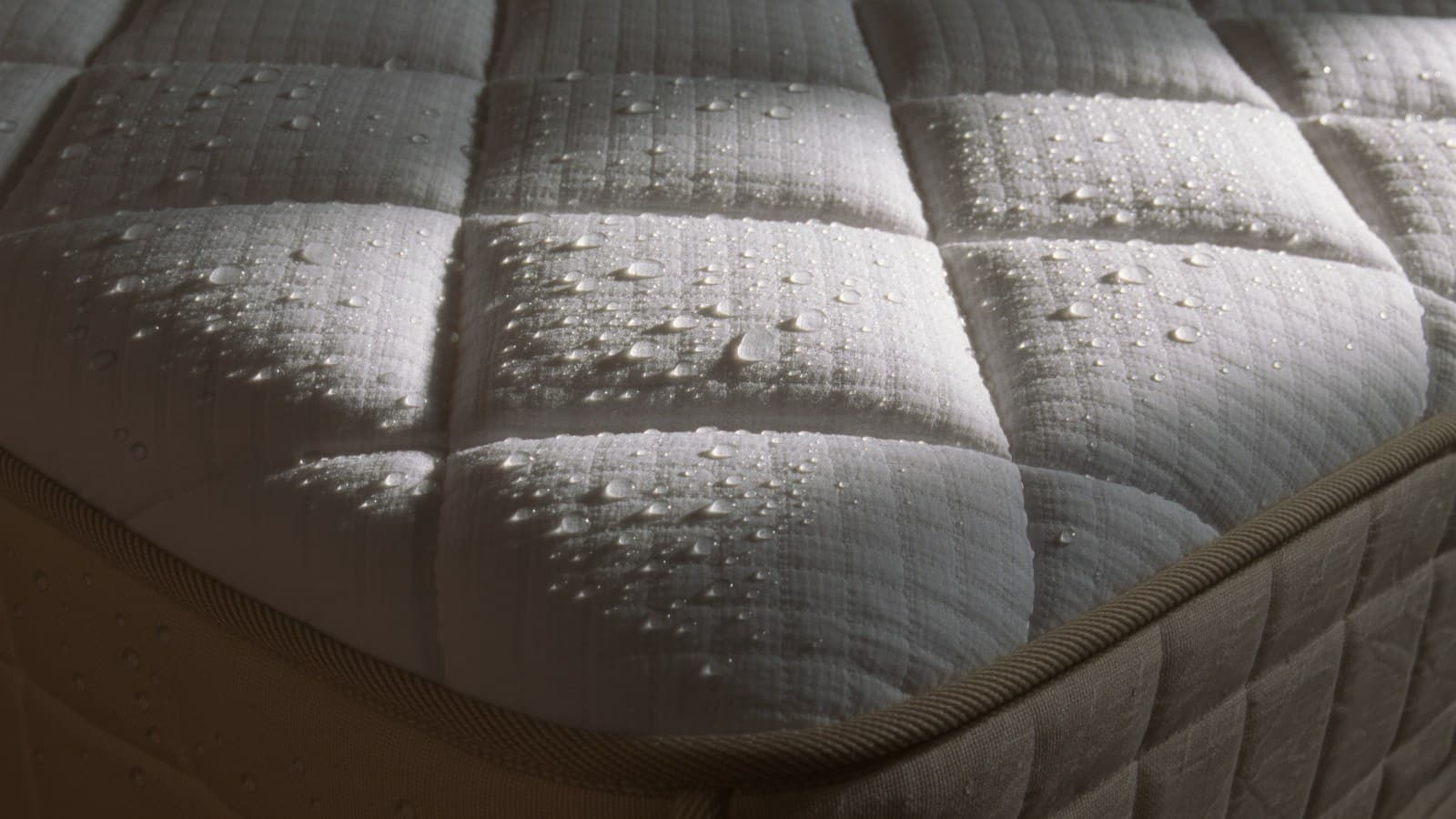
A mattress protector is a textile layer placed under the fitted sheet, directly on top of the mattress, to shield it from sweat, spills and stains. Since a mattress itself cannot be washed, the protector takes on that job and extends the mattress's usable life. It is used at home as well as in hotels, dormitories and healthcare facilities to keep mattresses hygienic.
What Does a Mattress Protector Do?
A mattress protector serves three main purposes:
- It stops liquid from soaking into the foam and spring layers, preventing mold and odor.
- It keeps sweat, skin flakes and dust from touching the mattress directly, keeping it hygienic.
- It protects the mattress surface from wear, extending its service life and delaying replacement.
People with dust-mite sensitivity often prefer a waterproof or tightly woven protector; if you have allergy symptoms, we recommend consulting a specialist to find the product that suits you best.
Types of Mattress Protectors
| Type | Feature | Best Used In |
|---|---|---|
| Waterproof Protector | A PU (polyurethane) membrane laminated to the underside; liquid stays on top | Nurseries, healthcare facilities, elderly care |
| Quilted Protector | Fiber-filled, stitched (quilted) construction for both protection and comfort | Home use, hotels |
| Ultrasonic Protector | Bonded with heat and pressure instead of stitching, so there are no needle holes to weaken waterproofing | Hospitals, dormitories, high-use settings |
| Fitted (Elastic) Protector | Elastic skirt that wraps around the mattress corners, resists slipping | Home use, single/double beds |
| Tela (Plain Weave) Protector | Tightly woven cotton base fabric without lamination, breathable | Light protection where moisture is not a concern |
For institutional buyers such as hotels, dormitories and hospitals, custom weights and sizes are also available. See the full range on our Mattress Protectors page.
Choosing a Mattress Protector by Use Case
- Home use: Quilted or fitted protectors balance comfort and protection.
- Hotels: Ultrasonic or waterproof protectors withstand frequent laundering and high turnover.
- Dormitories: Durable, easy-wash, quick-dry quilted or ultrasonic protectors work best.
- Healthcare facilities: Waterproof, disinfectant-resistant ultrasonic protectors meet hygiene requirements.
- Babies: Breathable, wash-resistant, lightweight waterproof protectors are recommended.
For institutional projects requiring custom sizes, fabrics or fill weights, see Custom Manufacturing.
Standard Mattress Protector Sizes
| Category | Sizes (cm) |
|---|---|
| Single | 90×190, 100×200, 120×200 |
| Double | 150×200, 160×200, 180×200 |
| Oversized | 200×200 |
Choosing a protector 5-10 cm larger than your mattress helps it wrap the corners fully and reduces slipping during use.
How to Wash a Mattress Protector
Whether a mattress protector can be machine washed depends on the type: quilted, fitted and plain-weave protectors wash easily in a standard machine. Waterproof and ultrasonic protectors need a bit more care to protect the PU membrane.
As a general rule, keep the water temperature under 40°C. Quilted and plain-weave protectors tolerate 40-60°C, while waterproof, membrane-backed protectors should stay within 30-40°C, boiling-hot water can crack the lamination and ruin the waterproofing.
Washing tips:
- Use a delicate or cotton cycle; high spin speeds strain the lamination.
- Avoid bleach; fabric softener can clog the pores of the waterproof layer.
- Prefer liquid detergent, as powder detergent can leave residue on the fabric after rinsing.
Quilted and plain-weave protectors can go in a tumble dryer on low heat. Waterproof and ultrasonic protectors are better air-dried flat in the shade, since dryer heat can damage the membrane. If ironing, avoid the membrane side and iron only the fabric face on low heat.
Frequently Asked Questions
Can a mattress protector be washed?
Yes, most mattress protectors can be machine washed at home. Always check the care label, especially for waterproof, membrane-backed models.
How do you wash a mattress protector?
Quilted and plain-weave protectors can go in the machine on a delicate cycle at 40-60°C. Waterproof and ultrasonic protectors should be washed at 30-40°C, on a low spin, with liquid detergent.
What temperature should a mattress protector be washed at?
Quilted and plain-weave protectors wash well at 40-60°C. Waterproof, membrane-backed protectors should stay at 30-40°C to protect the membrane.
Can a mattress protector go in the dryer?
Quilted and plain-weave protectors can be tumble dried on low heat. Waterproof and ultrasonic protectors are best air-dried flat rather than machine dried.
Choosing the right mattress protector for your use case, and washing it correctly, is a simple investment that keeps a mattress hygienic and comfortable for years. For bulk orders, hotel, dormitory or hospital projects, or custom sizing requests, reach out through our Contact page.